Khajuraho: Spirituality in Indian Temples
Discover the awe-inspiring Khajuraho temples, a UNESCO World Heritage site, where architecture and sensuality intertwine, elevating physical beauty to spiritual significance.
GEO INDIGEO CULTUREHOME PAGE
Aman Kumar
2/27/20263 min read
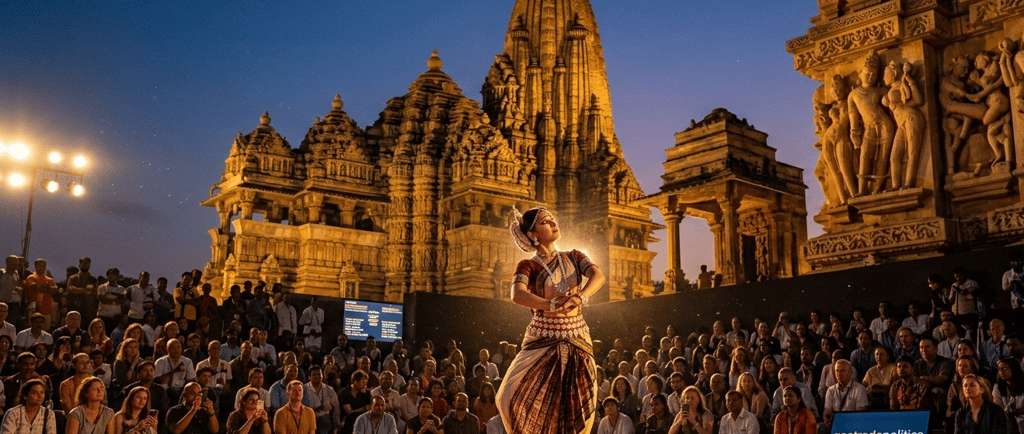
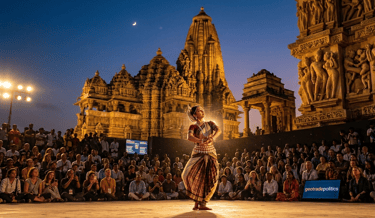
Amidst the noisy ramblings of international trade and politics, an ancient monument in Central India, known for its architecture uniquely bathed in sensuality that often rises from the mundane to the position of spirituality, just hosted a week-long classical dance festival ending on February 26.
Christened Khajuraho Dance Festival, 2026, locally known as Khajuraho Nritya Samaroh, was a week-long celebration of rhythm, grace, and cultural continuity — held against the magnificent backdrop of the illuminated temples.
The classical performances each evening witnessed present leading exponents of India’s revered classical dance forms such as Bharatanatyam, Kathak, Odissi, Kuchipudi, Manipuri and Kathakali. The rhythmic movements accompanied by heart-warming music, presented at the open-air arenas near temples like Chitragupta and Vishvanatha with the stone carvings glowing under floodlights mesmerized art lovers who came from countries across the globe.
Daytime at Khajuraho was equally lively with handicraft bazaars, folk and tribal performances, interactive cultural workshops, and exhibitions celebrating India’s diverse regional arts. These activities enriched the festival into a broader cultural carnival — a holistic celebration of Indian heritage.
A Walk-through Khajuraho
The first light of dawn slips gently over the ancient stones of the Khajuraho Monuments, warming their honey-colored surfaces until they glow like living skin. In the quiet hush of morning, the temples seem less like structures and more like poetry carved into stone—breathing, arching, yearning toward the sky.
Built between the 9th and 12th centuries under the patronage of the Chandela rulers, these temples rise from the earth with a rhythm that feels almost human. Their soaring shikharas curve upward in clustered crescendos, like a mountain range sculpted by devotion and desire alike.
Every surface pulses with intricate carvings—celestial beings, dancers caught mid-twirl, musicians lost in melody, and lovers entwined in intimate embrace.
Here, sensuality is not hidden in shadow. It is illuminated, celebrated, sanctified.
The famed mithuna figures—couples locked in fluid union—are sculpted with astonishing grace. Their bodies bend like vines, limbs intertwined in gestures of affection and ecstasy. Yet there is no vulgarity in their closeness. Instead, there is tenderness, playfulness, an almost divine serenity. The stone seems soft under their touch, as if warmed by centuries of whispered devotion.
Wander toward the majestic Kandariya Mahadeva Temple, the grandest of them all, and you feel the architecture swell around you. The temple’s vertical lines draw the eye upward, while its sculpted panels ripple with earthly passion. This interplay—between ascent and embrace, heaven and flesh—forms the soul of Khajuraho.
In Indian philosophy, sensual desire is not the enemy of spirituality; it is one of life’s sacred aims—kama, intertwined with duty, prosperity, and liberation. The artists of Khajuraho understood this deeply. Their chisels captured not just physical union, but the harmony of energies—masculine and feminine, mortal and divine—flowing together in cosmic balance.
As sunlight shifts through the day, shadows move across the carvings, giving them motion. A hand seems to reach further. A glance grows more secretive. A smile deepens. The temples become a living tapestry of longing and transcendence.
By twilight, when the sky turns rose and gold, the stones cool once more. The lovers carved into their walls remain suspended in eternal intimacy—reminding every visitor that beauty, desire, devotion, and liberation are threads of the same sacred fabric.
Khajuraho does not merely display sensuality. It consecrates it.
Khajuraho lies quietly in central Madhya Pradesh, far from India’s main trade routes. Once the ceremonial capital of the Chandela dynasty, it preserves one of the world’s most remarkable temple landscapes—where spirituality, art, and human experience are carved into stone with rare confidence.
A Timeless Tapestry of Art, Devotion and Dance
Khajuraho, nestled in the heart of Madhya Pradesh, India, is an ancient cultural treasure renowned for its stunning medieval temples and vibrant artistic legacy.
Khajuraho Monuments showcases exquisite Nagara-style architecture and intricate sandstone carvings depicting gods, dancers, musicians, and scenes from daily life— a testimony to India’s rich spiritual and artistic heritage.
These temples, once part of a sprawling complex of around 85 structures—about 25 survive today, were later rediscovered and conserved, earning UNESCO World Heritage status in 1986.
Nataraj, ‘Shiva’, the Lord of Cosmic Dance
The theme of the Khajuraho Dance Festival, 2026 was ‘Natraj’, a tribute to Lord Shiva as the cosmic dancer. The cosmos of the dance of Lord Shiva, as the Indian philosophy holds.
Visitors to Khajuraho often combine the festival with exploration of local landmarks like the serene Ken River, bird-watching opportunities, nature excursions like Pandav Falls, archaeological museums showcasing Chandela artifacts, and vibrant artisan markets offering traditional crafts and souvenirs.
Khajuraho inspires awe, not just for its architecture but for the way sensuality has been philosophically elevated to the position of spirituality here. Visitors here discover that worldly things are divine.
(Geotradepolitics.com plans to bring to you more stories from the mystic land, Indian sub-continent…)