UN Environment Programme releases Report, Warns Catastrophe
The sixteenth edition of the UN Environment Programme's (UNEP) Emissions Gap Report, published on November 4, 2025, warns that the Paris Agreement goal of limiting warming to 1.5°C will likely be exceeded in the near term.
GEO WEATHERHOME PAGEGEO ANALYSIS
Team GTP
11/4/20252 min read

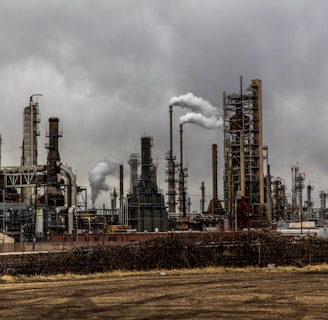
United Nation’s Environment Programme said on Tuesday that the world has failed to meet its main climate change target of limiting the rise in global temperatures to 1.5 degrees Celsius.
The next decade too, is expected to further witness temperature rise, the UN Environment Programme has added.
The sixteenth edition of the UN Environment Programme's (UNEP) Emissions Gap Report, published on November 4, 2025, warns that the Paris Agreement goal of limiting warming to 1.5°C will likely be exceeded in the near term.
The report emphasizes the critical need for immediate, drastic action and a six-fold increase in mitigation investment to keep a return to 1.5°C by 2100 a possibility.
Key Findings and Summary
Projected Temperature Rise: Current national climate pledges (Nationally Determined Contributions or NDCs), even if fully implemented, put the world on a path to a temperature increase of 2.3°C–2.5°C above pre-industrial levels. Based on current policies alone, the world is heading for a more catastrophic 2.8°C warming.
The Emissions Gap: The gap between current commitments and the required reductions to meet the Paris Agreement targets remains massive.
To get on track for the 1.5°C target, countries must collectively cut annual greenhouse gas (GHG) emissions by 55 per cent by 2035 (from 2019 levels).
For the 2°C target, a 35 per cent reduction by 2035 is needed.
1.5°C Exceedance Inevitable in Short Term: Given the scale of the necessary cuts and the short time remaining, a temporary "overshoot" of the 1.5°C limit is now very likely within the next decade. The focus must shift to limiting this overshoot to minimize damages and make a return to 1.5°C by 2100 feasible.
Technological Possibility, Political Challenge: The report notes that the required low-carbon technologies, such as wind and solar energy, are available and becoming cheaper. The primary barriers are a challenging geopolitical environment, insufficient support for developing countries, and the need to reform the international financial architecture.
Call for Stronger NDCs: Nations are urged to significantly enhance their new NDCs, due for submission in early 2025 ahead of COP30. These enhanced pledges must be backed by "whole-of-government" approaches and massive increases in investment.
Major Emitters' Responsibility: G20 nations, especially the largest emitters, are called upon to do the heavy lifting in reducing emissions.