Troops Deployed to Control Bears in Japan
On the eve of international Climate Summit, COP30 in Brazil, Japan is in a war different from the normal war—against its bear population that has forced the Japanese authorities to deploy its troops in what is being thought as a result of climate change.
GEO ANALYSISHOME PAGE
Team GTP
11/5/20251 min read
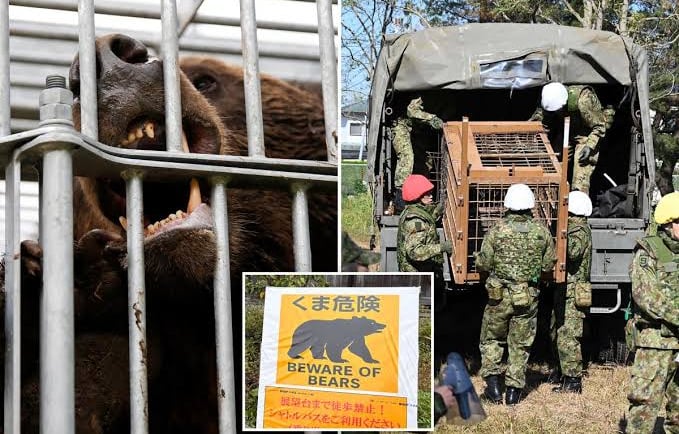
On the eve of international Climate Summit, COP30 in Brazil, Japan is in a war different from normal war—against its bear population, that has forced the Japanese authorities to deploy its troops in what is being thought as a result of climate change.
The country has witnessed more than 100 bear attacks since April this year, which is being hailed as ‘unprecedented’. The troops have been deployed in the country’s north from Wednesday with a mission to help trap bears after the local communities complained that they were struggling to cope with the wave of attacks.
According to records of the Ministry of the Environment, 12 persons have been killed by bears during the last months.
Climate change and rural depopulation are being made responsible for the wave of bear attacks. According to reports, due to climate change, bears are venturing into human habitats in search of foods.
Residents have been advised to keep indoors after sunset, and avoid venturing out into deep forests to keep away from bears.
According to news reports, large number of bears have been sighted in different parts of the country this year, epicentre being the Akita region.
Bears in Japan, particularly the Asiatic black bears, rely heavily on acorns and other natural food sources during the fall months. If the acorn crop fails or is less abundant in a given year, bears may venture closer to human-populated areas in search of alternative food sources like crops, garbage, or livestock. This has been a significant factor in bear behavior in the past.
Japan has been experiencing increasing urbanization and development in rural areas. This encroachment reduces the available habitat for bears, forcing them to move into human-populated areas more frequently.
As forests are cleared for farming, logging, or infrastructure, bears may no longer have enough space to live comfortably within their natural range.
Moreover, bears are curious animals and sometimes venture into human settlements simply out of curiosity or to search for food.
Also, over the years habitats of humans and bears in Japan seems to be overlapping in recent days.