How Rare Earths, Minerals Drive Alignments of Nations
U.S. President Donald Trump is scheduled to meet leaders of five Central Asia countries on Thursday at the White House. The Central Asian countries include Kazakhstan, Kyrgyzstan, Tajikistan, Turkmenistan, and Uzbekistan.
GEO ENERGYHOME PAGE
Team GTP
11/6/20252 min read
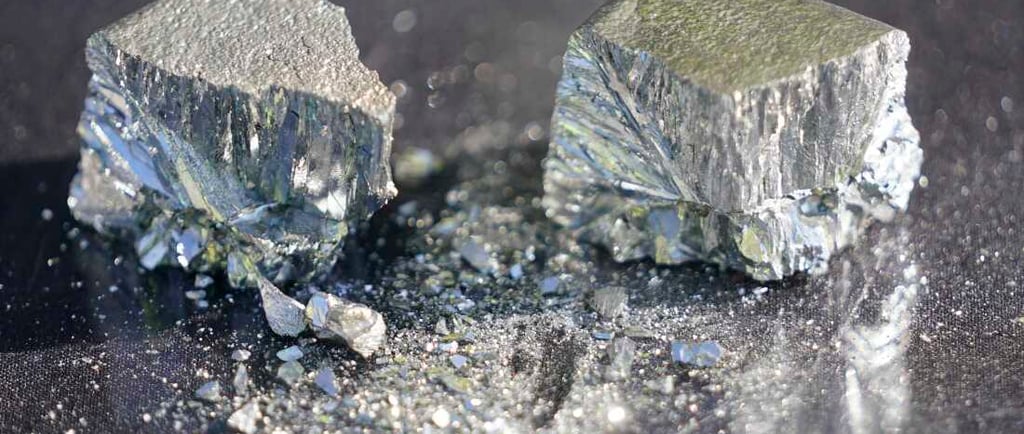
U.S. President Donald Trump is scheduled to meet leaders of five Central Asia countries on Thursday at the White House. The Central Asian countries include Kazakhstan, Kyrgyzstan, Tajikistan, Turkmenistan, and Uzbekistan.
The purpose of the meeting is to advance cooperation on economic, energy and security issues, reportedly to counter the influence of Russia and China in the region.
Trump is also scheduled to meet Syrian President Ahmed al-Sharaa at the White House on Monday.
After the overthrow of former president Bashar al-Assad, the new regime in Syria led by Ahmed al-Sharaa has re-aligned his country with the United States of America. The U.S. Department of States had made hectic effort to keep Russia and China awa from Syria after the overthrow of al-Assad.
Months before, President Trump had even met Ahmed al-Sharaa in Syria during his central Asian visit.
China and Russia have stakes in central Asia region’s mining, processing, and infrastructure systems, which Washington does not like. So, Washington is seeking to establish a foothold through cooperation with the States here.
CHINA has Expanded Infrastructure in the Region
While China has expanded its infrastructure in the five States of Central Asia, namely Kazakhstan, Kyrgyzstan, Tajikistan, Turkmenistan, and Uzbekistan were all part of the Soviet Union until its dissolution in 1991, and thus had remained economically tied down with Russia. The five countries are rich in mineral resources including rare earths—something that the United States is particularly interested in.
INDIA too is in an Agreement for Cooperation
India has entered into an agreement with the Central Asian nations to strengthen cooperation on rare earth and critical mineral research and exploration.
This effort includes establishing a formal India-Central Asia Rare Earths Forum to encourage joint exploration and exchanges of technical delegations, with the next forum meeting scheduled for 2026. The goal is to diversify the supply chain for these essential minerals.
RICH MINERAL DEPOSIT
The countries hold vast deposits of uranium, copper, gold, rare earths and other strategic minerals essential to global energy requirement.
Kazakhstan, the region is the world’s leading uranium supplier, while Uzbekistan too is rich in uranium. The five countries together account for just over half of the world’s uranium production—all of which is eyed upon by powerful economies like the U.S., China, Russia and India. Energy is at the root for nations’ alignment or conflict in today’s geo-trade-politics.
To conclude,
Rare Earths and other minerals are the driving forces for nations’ alliance, cooperation or conflicts.